You watched the video. Maybe you watched ten of them. And every time it ended, you were left with the same feeling: you wanted to know more. What actually triggers rigor mortis? How do forensic scientists really determine time of death? What does a body look like at five years, at fifty, at one hundred? The videos give you the beginning of the answer. But there is always more science underneath — and most of it never makes it into a twelve-minute video.
The problem is not that the information does not exist. It does — buried inside academic papers, forensic textbooks, and research journals written for professionals, not for curious people like you. You could spend weeks searching and still not find a clear, complete, jargon-free explanation of what you actually wanted to know. Most popular content about death either sensationalises it or stays so shallow it leaves you with more questions than you started with. Neither is useful.
✸
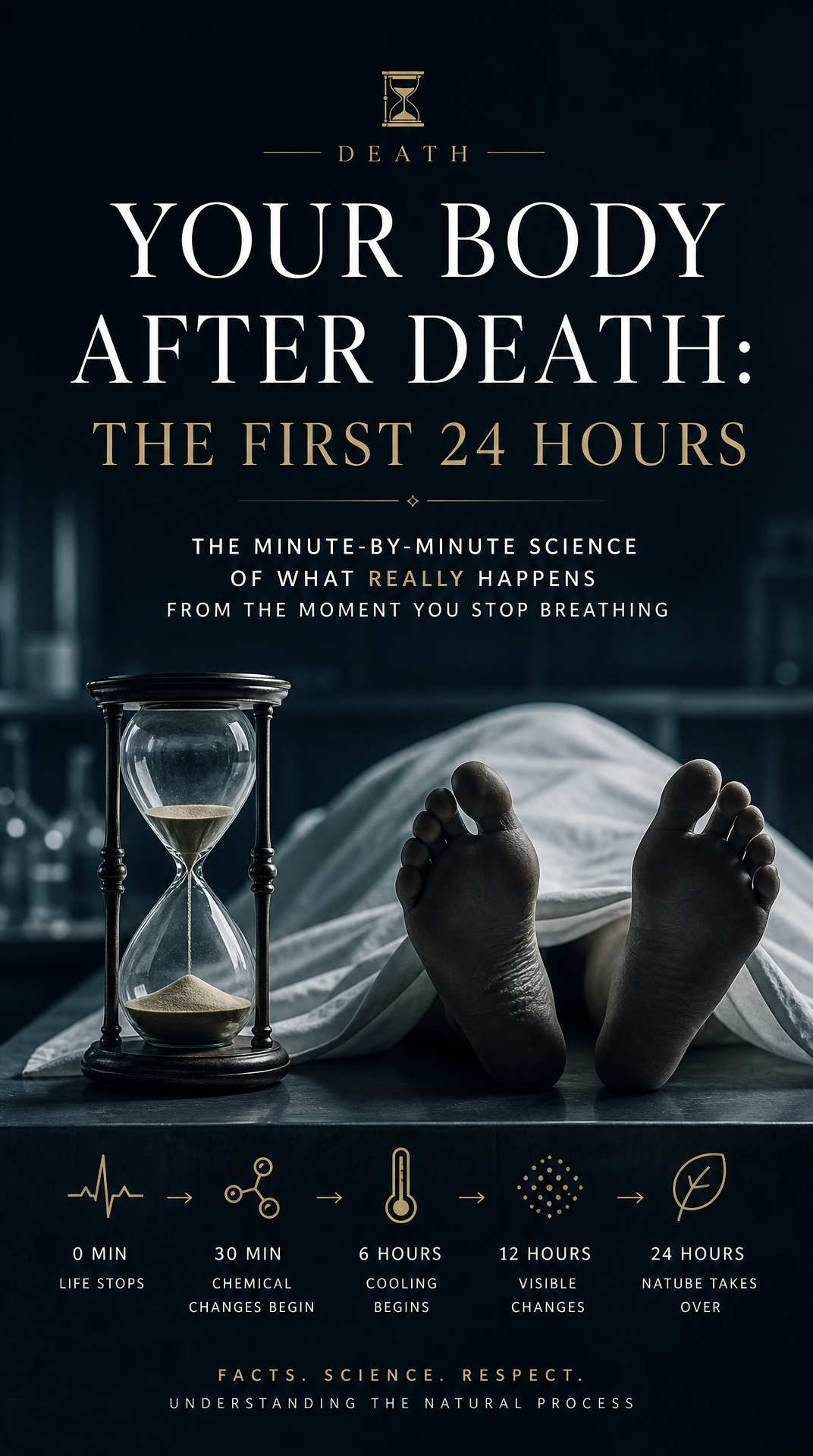
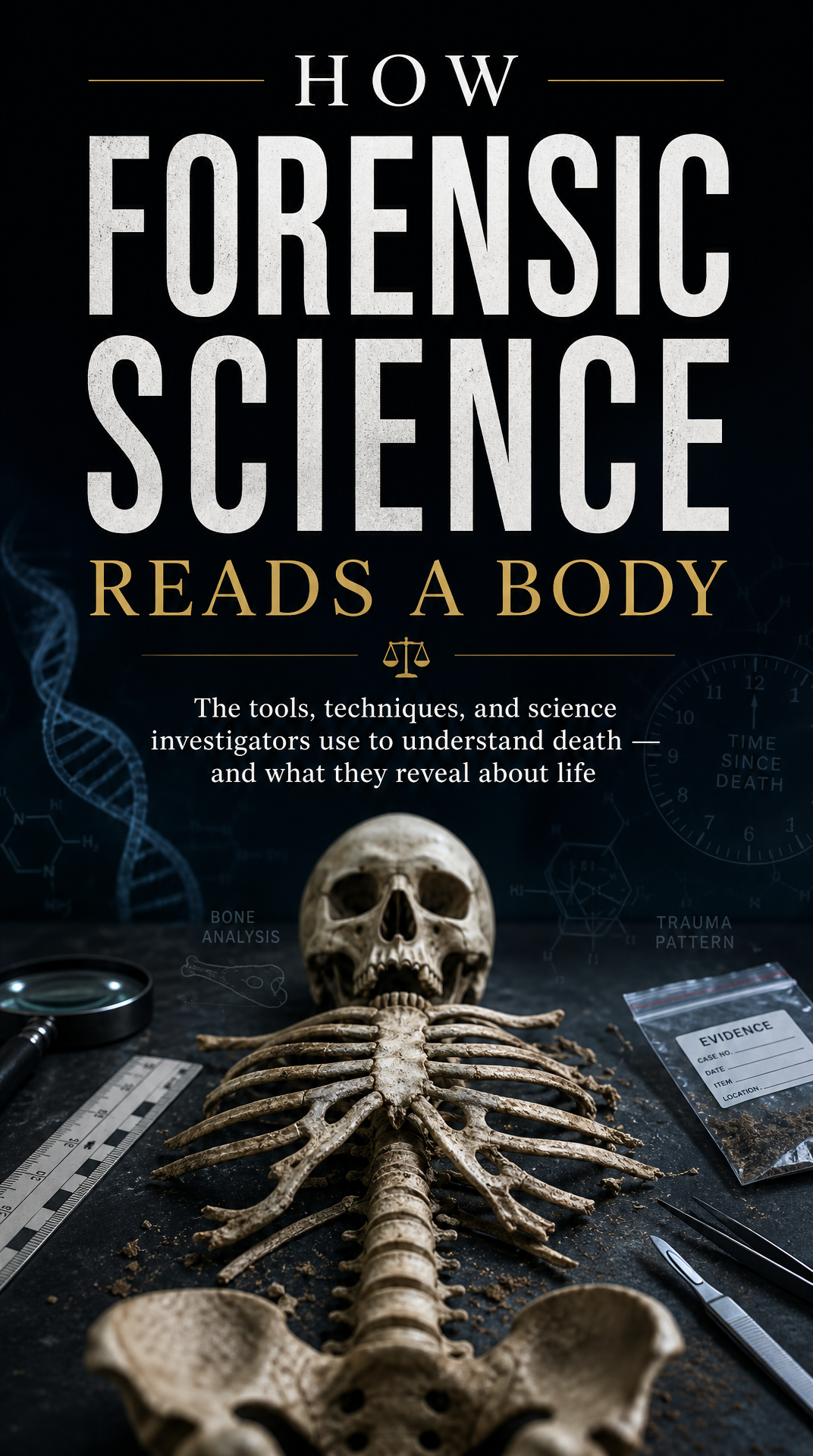
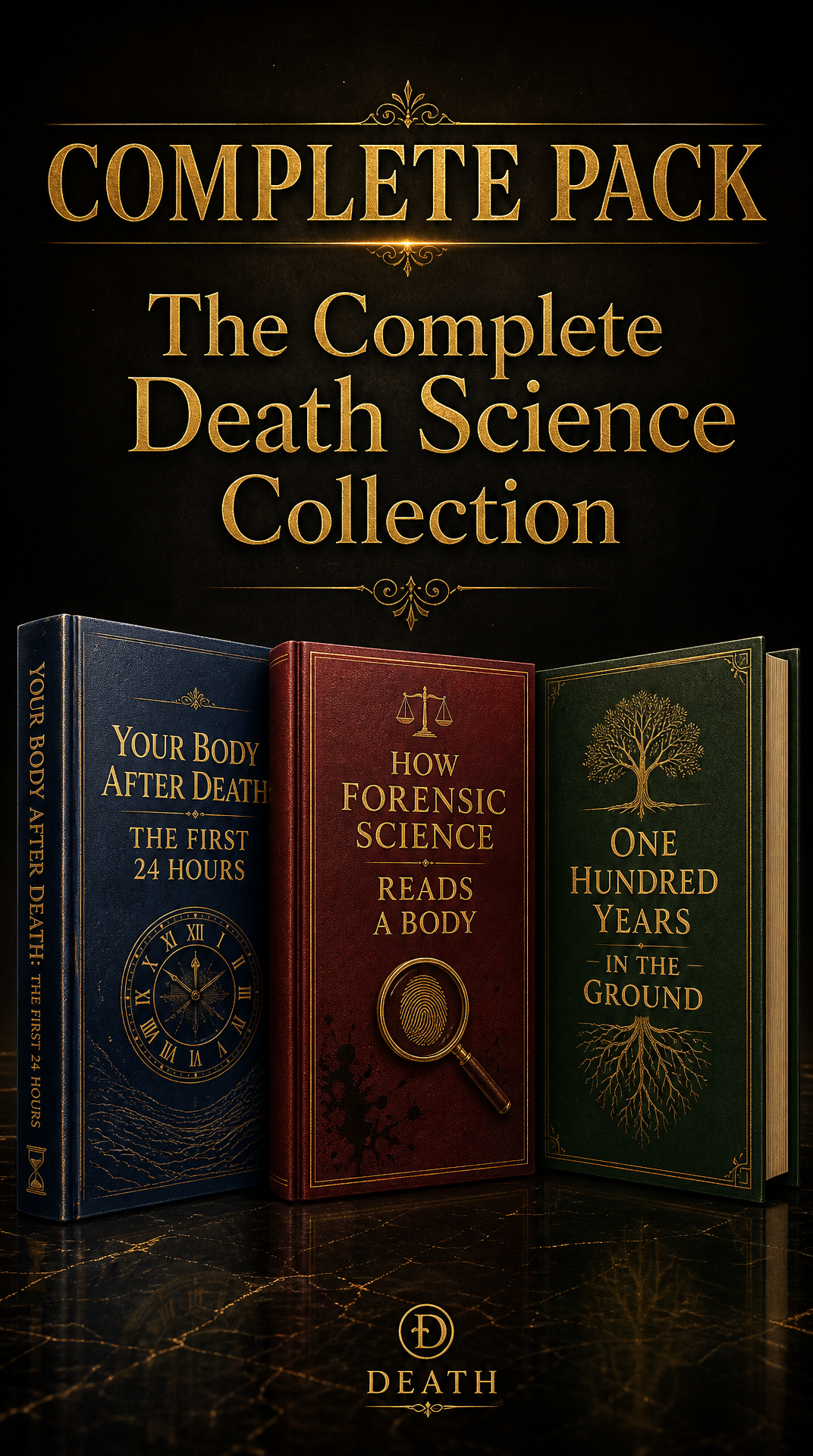
These three guides were built to solve that problem. Every chapter is based on verified scientific and forensic research, written in the same clear, direct, taboo-free language as the channel — but with the depth and detail a video cannot provide. Guide 1 covers the first 24 hours in full. Guide 2 takes you inside forensic science and the autopsy process. Guide 3 follows the body across years, decades, and centuries. Together, they give you the complete scientific picture of what death does to the human body — from the first second to the last trace.
Understanding death is not morbid. It is one of the most fundamental things a human being can do. Every person who has ever wondered what happens — to a body, to a loved one, to themselves — deserves a real answer. Not a sanitised one. Not a frightening one. A true one. That is what these guides are for. And at less than the price of a single book, there is no reason to stay curious and uninformed when the answers are right here.